

Building muscle comes down to three things: a consistent calorie surplus, enough protein to repair and build tissue, and smart meal timing to fuel your workouts and recovery.
Forget about complicated or restrictive diets. The secret is focusing on these fundamentals. This ensures the hard work you put in at the gym actually leads to real, sustainable results.
Your Blueprint for Eating with Purpose
Building muscle isn’t just about lifting weights—it’s about giving your body the raw materials it needs to grow stronger. Many people get lost in complex diet rules, but the truth is much simpler.
A solid muscle-building nutrition plan isn’t about perfection; it’s about consistency. It needs to fit into your life, not become a second job.
The goal is to build a sustainable framework that supports your training without adding more stress. This means getting past generic advice and understanding what drives progress. At OBF Gyms, we guide busy professionals through this all the time, focusing on what truly moves the needle.
We're going to break down the foundational elements:
- Calorie Surplus: To build new muscle tissue, you have to eat slightly more calories than you burn. This provides the extra energy your body needs for repair and growth.
- Adequate Protein: Think of protein as the literal building blocks for muscle. Hitting your daily protein target is non-negotiable if you want to see real change.
- Nutrient Timing: What you eat—and when—around your workouts can significantly impact your energy, performance, and how quickly you recover.
This guide is designed to cut through the noise. It’s a straightforward, science-backed approach that works without forcing you to overhaul your life. Think of it as your blueprint for eating with intention.
More Than Just a Diet
One of the biggest mistakes people make is viewing this as just another "diet." Diets are temporary and often restrictive. A nutrition plan for building muscle, on the other hand, is a long-term strategy that aligns with your lifestyle and fitness goals.
It's about fuelling your body for performance and recovery, day in and day out. For a comprehensive look at all pieces of the puzzle, including training and recovery, a dedicated practical guide to building muscle can be an incredible resource.
Ultimately, this approach empowers you to make smart food choices that fuel your progress. It's about creating habits that stick, ensuring the strength you build in the gym is supported by the fuel you provide in the kitchen.
Calculating Your Personal Fuel Requirements
A cookie-cutter plan will get you cookie-cutter results. To build real muscle, your nutrition must be tailored to your body, your goals, and your lifestyle. This is where we stop guessing and start calculating the specific numbers that will drive progress.
Calculating your fuel requirements isn’t about being obsessive. It’s about giving yourself the knowledge to make deliberate food choices that support all the hard work you’re putting in at the gym. Let's break down how to find your starting point.
Start With Your Calorie Target
The non-negotiable principle of muscle growth is a calorie surplus. Simply put, you must eat more energy than your body burns to provide the raw materials for building new muscle. A smart starting point is a conservative surplus of 250–500 calories above your maintenance level.
This modest increase helps prioritize lean muscle gain while minimizing fat storage. Here’s a straightforward way to estimate your daily calorie needs for growth:
- Find Your Maintenance: Multiply your body weight in pounds by 15. For a 180 lb person, that’s 180 x 15 = 2,700 calories. This is a solid estimate for someone moderately active.
- Add the Surplus: Add your target surplus. Using our example, that’s 2,700 + 300 = 3,000 calories per day.
Think of this number as your starting line, not a permanent rule. We’ll adjust it later based on how your body responds.
Dial In Your Macronutrients
Once your calorie target is set, the next step is to determine your macronutrient split—how much protein, carbohydrates, and fat you’ll eat. Each macro plays a critical role in your muscle-building plan.
Prioritize Protein for Muscle Repair
Protein is the most important macronutrient for repairing and building muscle. Without enough of it, your body simply can't construct new tissue, no matter how hard you train. A proven target for building muscle is 1 gram of protein per pound of body weight (or roughly 2.2 grams per kilogram).
For our 180 lb example, the daily protein goal is 180 grams.
This might seem high compared to average intake. A 2015 report showed Canadian adults consumed about 79 grams of protein daily. While fine for general health, research consistently shows that active individuals need more—often between 1.2 to 1.7 grams per kilogram of body weight, or even higher. You can see broader nutritional trends in Statistics Canada's report on Canadian protein intake.
Set Fat for Hormonal Health
Dietary fat is essential for producing key hormones like testosterone, a major player in muscle growth. A healthy fat intake also supports overall health and helps your body absorb certain nutrients.
A good rule of thumb is to set your fat intake at 20–30% of your total daily calories.
- For our 3,000-calorie example, 25% would be 750 calories from fat.
- Since fat has 9 calories per gram, you’d divide 750 by 9, which equals about 83 grams of fat per day.
Fill the Rest With Carbohydrates
Carbohydrates are your body's primary energy source. They fuel your workouts and are crucial for refilling muscle glycogen stores afterward, which is key for recovery and performance.
After setting your protein and fat targets, the rest of your calories will come from carbs. Here's how the math works:
- Protein Calories: 180g of protein x 4 calories/gram = 720 calories.
- Fat Calories: 83g of fat x 9 calories/gram = 747 calories.
- Carbohydrate Calories: 3,000 (total) – 720 (protein) – 747 (fat) = 1,533 calories.
- Carbohydrate Grams: 1,533 calories / 4 calories/gram = 383 grams of carbohydrates per day.
This simple flow chart drives home the core principles of a solid muscle-building nutrition plan.
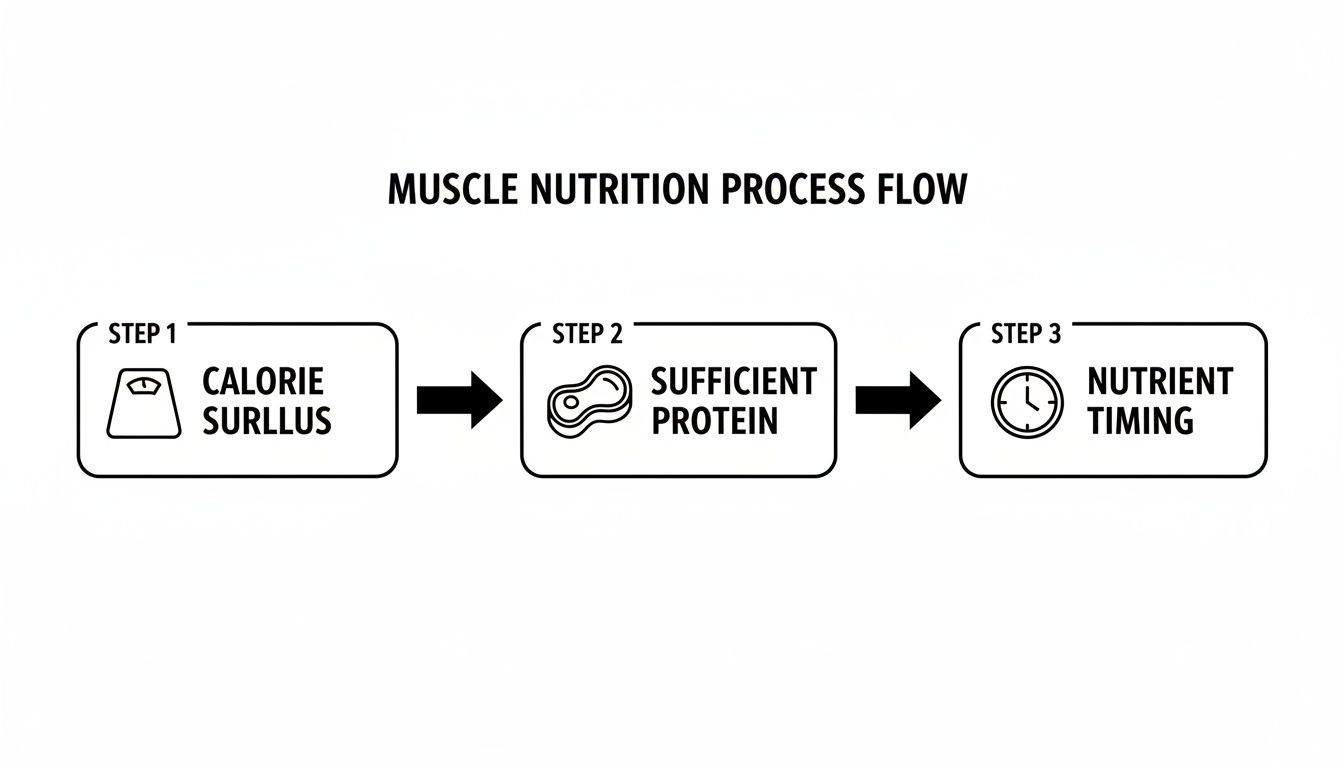
It highlights how a calorie surplus, sufficient protein, and smart nutrient timing work together to create the ideal environment for muscle growth.
Below is a table showing how these numbers can shift for the same individual based on different goals. It clearly illustrates why a personalized approach is vital—your needs for muscle gain are very different from maintenance or fat loss.
Sample Daily Macro Targets for Muscle Growth
| Goal | Daily Calories | Protein (g) | Carbohydrates (g) | Fat (g) |
|---|---|---|---|---|
| Aggressive Fat Loss | 2,100 | 175 | 160 | 82 |
| Maintenance | 2,625 | 175 | 258 | 102 |
| Muscle Growth | 2,900 | 175 | 310 | 109 |
Note: These are sample calculations for a 175 lb individual and should be adjusted based on personal activity level, metabolism, and results.
As you can see, calorie and carbohydrate figures change significantly depending on the goal, while protein remains high to support lean mass.
Your Personal Starting Point:
For a 180 lb individual aiming to build muscle:
- Calories: 3,000
- Protein: 180g
- Fat: 83g
- Carbohydrates: 383g
These numbers provide a clear, actionable baseline. The real magic happens when you put this plan into action, listen to your body, and make small, smart adjustments over time to keep progressing.
Designing a Meal Plan for a Hectic Schedule
Knowing your calorie and macro targets is a huge step, but those numbers are useless if you can't consistently hit them. For busy professionals, the real challenge isn't the math—it's getting the food on your plate during a packed work week.
This is where a structured, yet flexible, meal plan becomes your most powerful tool.

The goal isn’t to spend hours in the kitchen every day. It's about building a reliable system that fuels your body by being strategic, prepping smart, and making your nutrition work for your schedule, not against it.
Structuring Your Day Around a 9-to-5
One of the biggest hurdles for our clients is timing. How do you fit in multiple protein-focused meals when you're stuck in meetings? It's simpler than you think. The key is to anchor your meals around your workday and your training session.
For someone who trains after work, a practical framework looks like this:
- Breakfast (7:30 AM): Start your day with a solid protein and complex carb source to kickstart muscle protein synthesis and provide steady energy.
- Lunch (12:30 PM): A balanced meal with lean protein, carbs, and healthy fats keeps you full and mentally sharp through the afternoon.
- Pre-Workout Snack (4:30 PM): About 60-90 minutes before the gym, have something rich in easily digestible carbs with a bit of protein to top off your energy stores.
- Post-Workout Meal/Dinner (7:00 PM): This is your key recovery meal. Aim to eat within 1-2 hours after your session to replenish glycogen and give your muscles the raw materials they need to repair and grow.
This structure ensures you're consistently fuelled, preventing energy crashes and creating the perfect environment for muscle growth.
A Sample One-Day Meal Plan
What does this look like in practice? Here’s a full day of eating designed to hit our earlier targets (around 2,900 calories and 175g of protein). Think of this as a template, not a rigid script, to show how achievable these numbers are with simple, whole foods.
| Meal | Food Example | Macros (Approx.) |
|---|---|---|
| Breakfast | 4 whole eggs, scrambled; 2 slices whole-wheat toast with avocado. | 550 Cals, 35g Protein, 40g Carbs, 28g Fat |
| Lunch | 170g grilled chicken breast; 1 cup quinoa; 2 cups mixed vegetables. | 580 Cals, 50g Protein, 65g Carbs, 12g Fat |
| Pre-Workout Snack | 1 cup Greek yogurt (0%); 1 large banana; 1 tbsp honey. | 350 Cals, 25g Protein, 65g Carbs, 2g Fat |
| Post-Workout Shake | 1 scoop whey protein; 1 cup unsweetened almond milk; 1/2 cup frozen berries. | 220 Cals, 25g Protein, 20g Carbs, 4g Fat |
| Dinner | 170g salmon fillet; 1 large sweet potato; 1 cup steamed broccoli. | 650 Cals, 45g Protein, 55g Carbs, 28g Fat |
| Evening Snack | 1 cup cottage cheese; small handful of almonds. | 250 Cals, 30g Protein, 8g Carbs, 12g Fat |
This simple plan delivers a high-protein, nutrient-dense diet built on accessible foods from any grocery store.
Making Meal Prep Work For You
The single most effective strategy for sticking to your nutrition plan is meal prepping. Just 2-3 hours on a Sunday can set you up for a week of success, eliminating decision fatigue and the temptation of unhealthy convenience food.
Your future self will thank you. Investing a few hours in meal prep removes daily guesswork and ensures you always have a muscle-building meal ready to go, no matter how chaotic your day gets.
Here’s how to make it fast and efficient:
- Batch Cook Proteins: Grill a large batch of chicken breasts, bake several salmon fillets, or brown lean ground turkey.
- Prepare Carb Sources: Cook a large pot of quinoa or brown rice. Roast a tray of sweet potatoes.
- Chop Vegetables: Wash and chop bell peppers, broccoli, and onions. Store them so they're ready to be steamed, roasted, or stir-fried.
With these components ready, you can assemble a complete, macro-friendly meal in under five minutes.
Smart Snacking for Muscle Growth
Snacks aren't just for hunger; they are strategic opportunities to hit your daily protein targets. Keep high-protein options at your desk or in your bag to avoid mid-afternoon energy slumps.
Go-To High-Protein Snacks:
- Greek Yogurt: A cup of plain, 0% Greek yogurt can pack over 20 grams of protein.
- Hard-Boiled Eggs: Simple, portable, and a great source of high-quality protein.
- Beef Jerky: Look for low-sodium, minimally processed options for a protein-dense snack on the go.
- Cottage Cheese: An excellent source of slow-digesting casein protein, making it a perfect snack before bed.
- Protein Bars: Be selective. Choose bars with minimal added sugar and at least 15-20 grams of protein.
When you integrate these strategies, your calculated numbers transform into a sustainable, real-world plan that makes the right choice the easy choice.
Using Supplements to Enhance Your Progress
Let's be clear: a solid nutrition plan built on whole foods is the absolute foundation of muscle growth. But once that's in place, the right supplements can act as powerful accelerators.
Think of them as strategic tools to sharpen results and fill nutritional gaps, not magic potions. The supplement industry is full of hype, so we'll cut through the noise and focus on the few evidence-backed supplements genuinely worth your time and money.
The key is to use them strategically to support your hard work. They can help you recover faster, push harder, and get the building blocks your muscles need at the right time. When chosen wisely, they complete your muscle-building nutrition plan.
The Core Muscle Building Supplements
While the supplement aisle is endless, only a few products have consistently passed rigorous scientific testing. These are the essentials that deliver reliable, measurable benefits for building muscle.
Protein Powders (Whey, Casein, Plant-Based): This is the most foundational supplement. It's not a magical muscle builder; it's simply a convenient and efficient way to hit your daily protein targets, especially when you're busy.
- Whey Protein: A fast-acting option that digests quickly. It's rich in leucine, the amino acid that triggers muscle protein synthesis, making it perfect for a post-workout shake.
- Casein Protein: A slow-and-steady protein that digests over several hours, providing a sustained release of amino acids. It’s a great choice before bed to fuel muscle repair while you sleep.
- Plant-Based Blends: Modern blends combining pea, rice, or soy offer complete amino acid profiles that rival whey, making them an excellent choice for anyone.
Creatine Monohydrate: This is the most studied and effective performance supplement available. Creatine helps your muscles produce energy during intense exercise, allowing you to lift heavier for more reps. The standard dose is 3-5 grams per day. Forget complicated loading phases; simple, daily consistency is all you need.
By boosting your capacity for high-intensity work, creatine directly fuels the progressive overload required for muscle growth. It’s a simple, safe, and proven way to get more out of every training session.
To dive deeper into the science behind other options, this ultimate guide to supplements for muscle gain is an excellent resource.
Other Valuable Nutritional Aids
Beyond the big two, a couple of other supplements play a crucial supporting role, especially for those of us in Canada with limited sun exposure. These focus on overall health, which is the bedrock of consistent gym performance.
Key Supporting Nutrients:
- Vitamin D: Essential for hormone production, immune function, and bone health. Many Canadians are deficient, particularly in winter. Supplementing with Vitamin D3 can support your overall health and ability to train hard.
- Omega-3 Fatty Acids: Found in fish oil, these healthy fats help manage inflammation, support joint health, and improve cardiovascular function. Less inflammation means better and faster recovery between workouts.
Are You Missing Out on Proven Tools?
Interestingly, a significant gender gap exists in supplement use. A 2021 study of young Canadians revealed that 82.5% of young men used whey protein and 50.3% used creatine.
In contrast, only 51.9% of young women used whey and a mere 9.7% used creatine. This data suggests many women may be underutilizing these powerful, science-backed tools.
The benefits of creatine and quality protein powders are not gender-specific. They support universal physiological processes like energy production and muscle repair. Our goal is to help everyone feel confident using these tools effectively, based on science, not outdated stereotypes.
How to Track and Adjust for Continuous Results
Your body is an adaptive machine. A nutrition plan that works for the first eight weeks will eventually need adjustments to keep producing results. Long-term success requires monitoring your progress and making intelligent, data-driven changes.
This isn't about overhauling your plan every week. It's about making small, calculated tweaks based on real-world feedback to bust through plateaus. Think of it as a continuous feedback loop: eat, train, measure, adjust, and repeat.
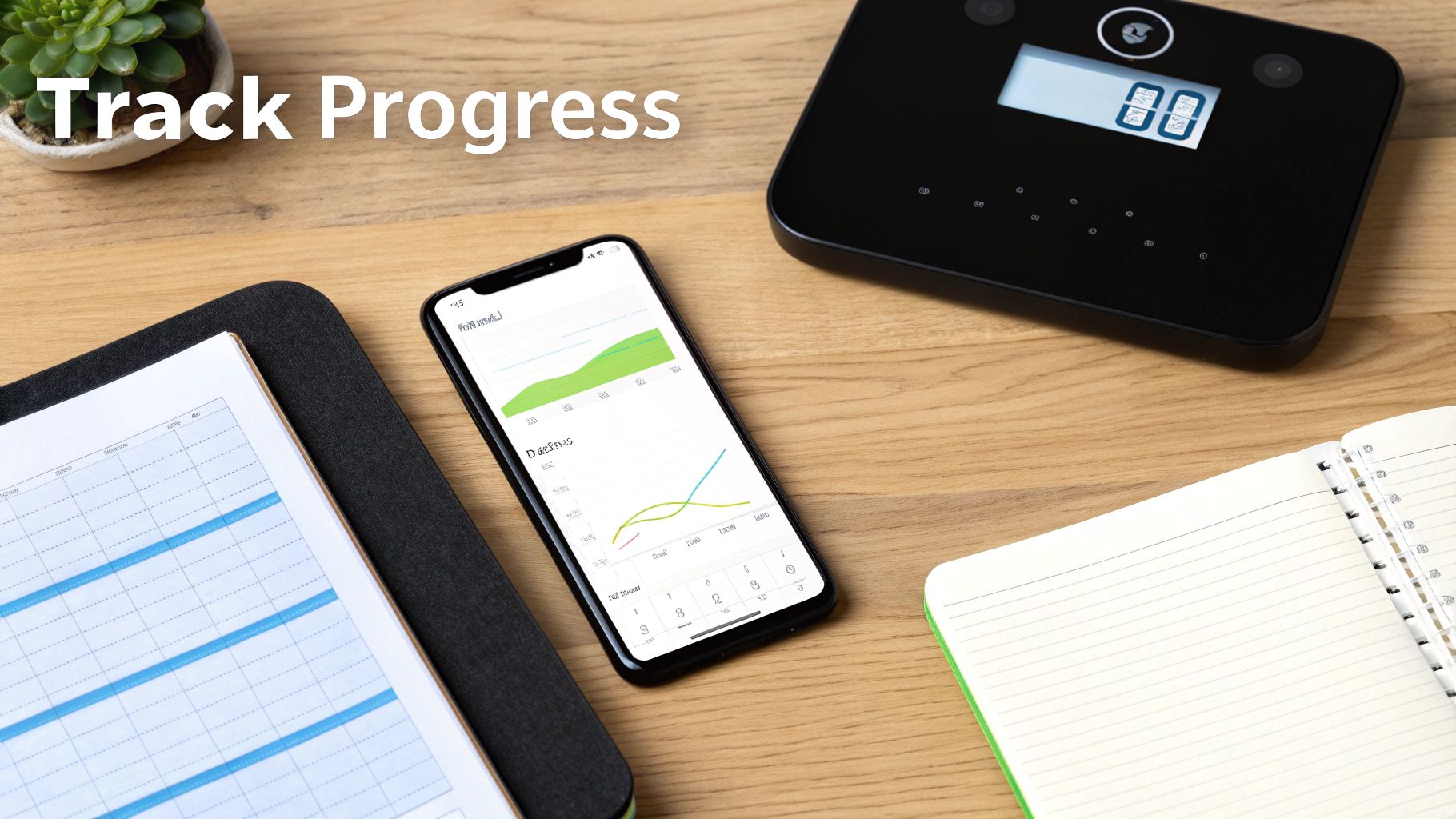
This proactive approach separates those who achieve lasting transformations from those who get stuck after a few months.
Look Beyond the Scale
The first mistake people make is relying solely on the bathroom scale. While it tells part of the story, it can be misleading. A solid plan will often lead to gaining muscle while losing fat—a process that might not move the scale much at all.
To get a true picture of your progress, combine hard data with how you feel and perform.
Objective Metrics:
- Body Composition Scans: Tools like InBody scans, which we use at OBF Gyms, provide precise data on changes in skeletal muscle mass and body fat percentage. Seeing muscle mass increase while body fat drops is a clear win, even if total weight stays the same.
- Circumference Measurements: Use a flexible measuring tape to track your chest, arms, waist, and thighs every 2-4 weeks. An expanding chest and arms with a shrinking waist is undeniable progress.
- Progress Photos: Take photos from the front, side, and back every four weeks in the same lighting. Visual changes can be incredibly motivating.
Subjective Feedback:
- Strength Gains: Are you lifting heavier or doing more reps? Your training log is one of the most reliable indicators of progress.
- Energy Levels: A good nutrition plan should make you feel energized, not drained.
- How Your Clothes Fit: Are your sleeves getting tighter while your waistband is getting looser? This is a classic sign of successful body recomposition.
When and How to Make Adjustments
Adjustments should be methodical, not emotional. Don't panic because the scale went up a pound overnight—that's just daily fluctuation. Give your body at least 2-3 weeks to show a clear trend before changing anything.
The goal is to make the smallest effective change. Drastic adjustments can lead to unwanted fat gain or stalled muscle growth. Be patient and trust the process.
Here are simple rules for making smart adjustments to your muscle-building nutrition plan.
Scenario 1: Your Weight is Stagnant and Strength has Plateaued
If your weight and lifts haven't budged for 2-3 weeks, your body has likely adapted. It's time to nudge your surplus up slightly.
- Action: Increase your daily calories by 150-250.
- How: Add this primarily through carbohydrates to fuel your workouts. This could be as simple as adding an extra half-cup of rice or a large banana to one of your meals.
- Monitor: Track for another 2-3 weeks. If progress resumes, you’ve found the sweet spot.
Scenario 2: You're Gaining Weight Too Quickly
If you're gaining more than 0.5-1 pound per week, you're likely putting on more body fat than necessary. The goal is lean muscle, not just weight for weight's sake.
- Action: Decrease your daily calories by 150-250.
- How: Slightly reduce your fat or carbohydrate intake. This might mean using less olive oil or having a smaller serving of potatoes.
- Monitor: Observe how this change affects your energy, performance, and rate of weight gain over the next few weeks.
By combining precise tracking with these simple adjustment rules, you take the guesswork out of your nutrition and steer your progress toward continuous results.
Common Muscle Building Nutrition Questions
Even with a perfect plan, questions pop up. Drawing from years of helping our members, here are straight-up answers to the questions we hear most often on the gym floor.
How Soon Should I Eat After a Workout?
The rigid 30-minute "anabolic window" has been overblown. While eating after your workout is important for recovery, that window is much wider than you think—several hours, in fact.
Focus on getting a quality meal with 20-40 grams of protein and some carbs within an hour or two of your session. This replenishes your energy and kickstarts muscle repair. If you ate a solid meal right before your workout, the urgency is even lower.
The bottom line: Consistency over the entire day matters far more than stressing about a perfect 30-minute window. As long as you hit your total daily protein and calorie targets, you're creating the right environment for muscle growth.
Can I Build Muscle and Lose Fat at the Same Time?
Yes, you absolutely can. This process, known as body recomposition, is most common for people new to lifting or returning after a long break.
It requires a bit of a tightrope walk. You need to be in a very slight calorie deficit (or at maintenance) while keeping protein intake high—around 1.8-2.7 grams per kilogram of body weight. This must be paired with a challenging, progressive strength training program.
It’s a slower path than chasing a single goal, but it's an effective way to build a leaner, stronger physique. Accurate tracking of your nutrition and body composition is key to ensuring you're losing fat while gaining or maintaining muscle.
Does My Diet Need to Be Perfect to Build Muscle?
Not at all. In fact, chasing perfection is one of the fastest ways to burn out. We prefer a more sustainable and realistic approach: the 80/20 rule.
Aim for 80% of your diet to come from nutrient-dense, whole foods like:
- Lean proteins (chicken, fish, lean beef, Greek yogurt)
- Complex carbs (oats, quinoa, sweet potatoes)
- Healthy fats (avocado, nuts, olive oil)
- Plenty of vegetables for micronutrients
This ensures your body gets the vitamins and minerals it needs to perform and recover. The other 20% is for foods you enjoy, even if they aren't "optimal." This flexibility makes a nutrition plan sustainable. It lets you go out with friends or have a treat without feeling guilty. Remember, consistency always wins against short-term perfection.
How Much Water Do I Really Need for Muscle Growth?
Hydration is one of the most overlooked parts of a nutrition plan, but it's critical. Your muscle tissue is roughly 75% water. Even slight dehydration can tank your strength, slow recovery, and impair nutrient delivery to your cells.
As a baseline, shoot for 3-4 litres of water per day. Increase that on days you train hard or when it's hot. A simple way to check is your urine colour—it should be pale yellow. The easiest hack? Keep a large water bottle with you all day.
Ready to stop guessing and start seeing real, measurable results? At OBF Gyms, we build personalized training and nutrition plans that fit your busy life and guarantee progress. Book a free consultation today and discover how our expert coaches can help you achieve your optimal body.
Generated with the Outrank app