

Losing 20 pounds in 3 months is an ambitious but achievable goal. It breaks down to a safe and sustainable loss of roughly 1.5 to 2 pounds per week. This is done through a smart combination of nutrition and progressive strength training—not endless cardio or crash diets. The key is creating a consistent 500-750 daily calorie deficit.
A Realistic Framework for Losing 20 Pounds
Successfully dropping 20 pounds in three months isn't about a secret formula; it's about following a clear, actionable plan. It's time to forget the confusing advice and extreme fads you see online.
The key is a focused approach that prioritizes fat loss while protecting your metabolism and building a stronger, more resilient body. This guide lays out the exact roadmap we use to help our clients in Toronto achieve significant, lasting results.
Instead of just chasing a number on the scale, our focus is on genuine body recomposition. That means losing fat while preserving, or even gaining, lean muscle. It's the difference between just getting smaller and actually getting healthier and stronger.
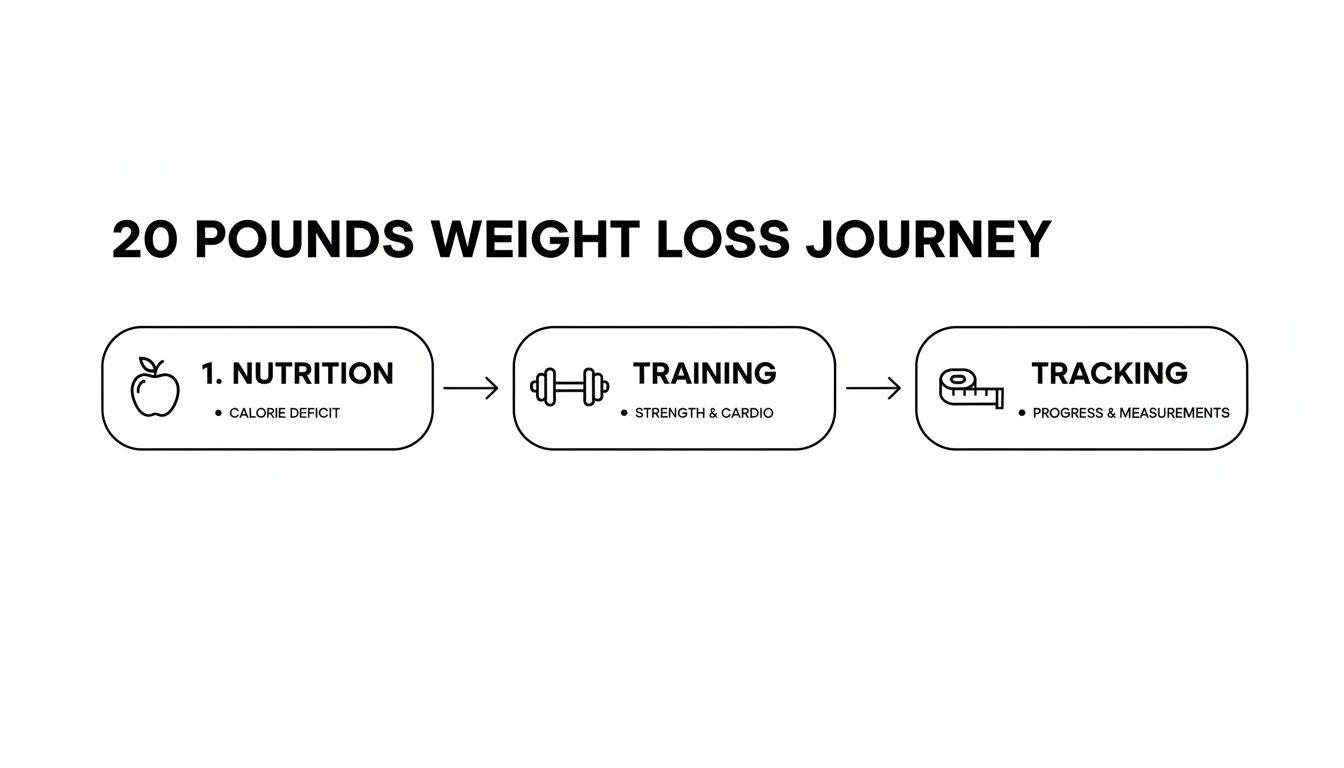
To make this 12-week transformation a success, we build everything on three core pillars that work together to drive your progress.
The 3 Pillars of Your 12-Week Transformation
Here’s a quick look at the core components we’ll be focusing on. Mastering these fundamentals is the secret to making this plan work for you.
| Pillar | Focus Area | Your Weekly Goal |
|---|---|---|
| Nutrition | Strategic Calorie Deficit | Maintain a consistent 500-750 calorie deficit daily through smart food choices, not starvation. |
| Training | Progressive Strength Training | Complete 3-4 strength workouts, focusing on getting stronger and preserving muscle mass. |
| Tracking | Consistent Progress Monitoring | Go beyond the scale—track body composition, measurements, and performance to see the full picture. |
Each pillar supports the others, creating a powerful feedback loop for consistent results week after week.
This approach works because it’s simple and effective. You'll focus on smart eating, effective training, and consistent tracking to guide your journey.
As you build out your 12-week plan, it helps to have a solid program to follow. You can integrate an ultimate workout routine for weight loss that combines the right strength and conditioning work to accelerate your results.
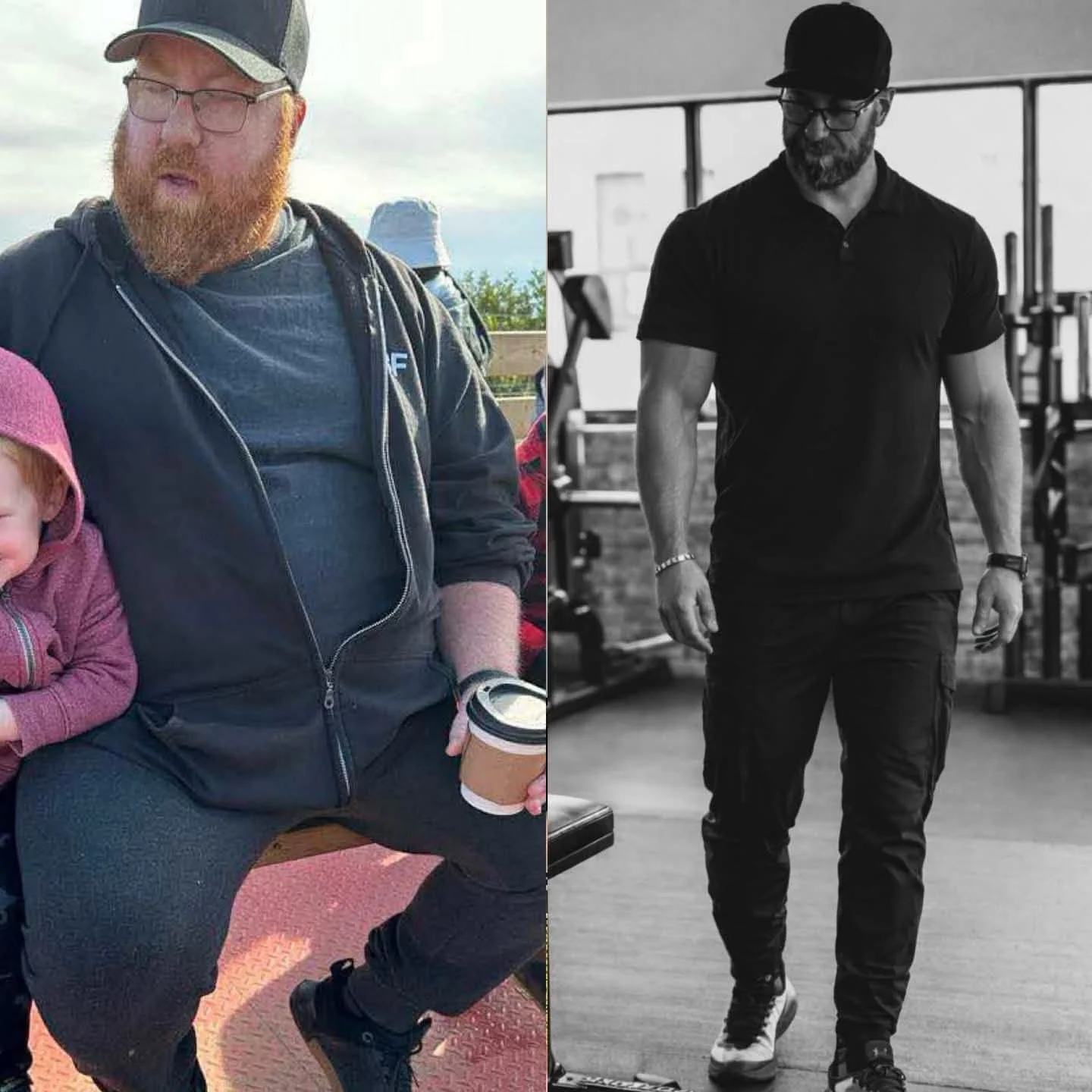
The goal isn't just to lose 20 pounds. It's to do it in a way that improves your body composition, boosts your metabolism, and builds habits that you can maintain long after these 12 weeks are over. This framework provides the structure for that sustainable change.
Weeks 1-4: Building Your Foundation
The first month of this 12-week journey is all about one thing: building a solid foundation. Forget about extreme workouts or crash diets. We're focused on establishing smart, repeatable habits that will carry you all the way to your goal. The key here is consistency over intensity.
This is where we ditch the guesswork and get precise. Your first step is to figure out your daily calorie needs. From there, we'll create a manageable deficit of 500-750 calories below your maintenance level. This is the sweet spot for losing 1 to 1.5 pounds of fat per week without torching your hard-earned muscle.
Your Nutrition Blueprint for Month One
Let's be clear: nutrition drives fat loss. For the first month, our priorities are protein and simplicity. For busy Toronto professionals, meal prep isn’t just a good idea—it’s your secret weapon for staying on track when your calendar is packed.
Your number one goal is hitting your protein target every single day. We recommend aiming for 0.7 to 1 gram of protein per pound of your goal body weight. This is non-negotiable for preserving lean muscle while in a calorie deficit, which is essential for keeping your metabolism fired up.
Here’s a sample meal plan built for simplicity and results:
| Meal | Example | Key Benefit |
|---|---|---|
| Breakfast | Greek yogurt with berries and a tablespoon of chia seeds | High in protein and fiber to keep you full and focused until lunch. |
| Lunch | Pre-cooked chicken breast with a large spinach salad and vinaigrette | A fast, protein-first meal you can prep on Sunday for the whole week. |
| Snack | A quality protein shake and a handful of almonds | Curbs afternoon cravings with easily digestible protein to aid muscle recovery. |
| Dinner | Baked salmon with quinoa and roasted broccoli | A perfectly balanced meal with healthy fats, complex carbs, and lean protein. |
A structure like this removes decision fatigue, making healthy eating the easiest option, not the hardest.
Mastering Foundational Strength Training
In the gym, the first four weeks are about mastering the fundamentals. We're focusing on big, compound movements—the multi-joint exercises that work several muscle groups at once. These give you the biggest bang for your buck for both burning calories and building strength.
Your weekly schedule will center around three full-body workouts. This frequency is perfect for stimulating muscle growth while allowing for proper recovery.
These are your go-to exercises for this phase:
- Goblet Squats: To build powerful legs and dial in your squat form.
- Dumbbell Bench Press: To develop upper body pushing strength in your chest, shoulders, and triceps.
- Bent-Over Rows: To build a strong, supportive back and fix that desk-worker posture.
- Overhead Press: For creating strong, defined shoulders.
- Romanian Deadlifts: To target your hamstrings and glutes while mastering the crucial hip-hinge movement.
The most important thing in these first four weeks is perfect form. We'll start with lighter weights to make sure every single rep is clean. This doesn't just get you better results; it's your best defense against injury down the line.
We’ll also introduce the concept of progressive overload, which is just a fancy way of saying we'll gradually ask your muscles to do more work. This could be adding a little weight to the bar or squeezing out one more rep with good form. That small, consistent push is what forces your body to adapt and get stronger.
The Power of NEAT
Your time in the gym is crucial, but the calories you burn outside of your workouts can make an even bigger difference. It’s called Non-Exercise Activity Thermogenesis (NEAT), and it covers everything from walking to a meeting to taking the stairs.
For a busy professional, finding ways to boost your NEAT is a game-changer. It’s how you increase your daily calorie burn without adding another gym session to your schedule.
Here are some dead-simple ways to increase your NEAT:
- Walk and Talk: Take your calls while pacing around the office or, even better, outside.
- Stand More: If you have a standing desk, use it. If not, just make a point to stand up regularly.
- Park Farther Away: Intentionally add a few hundred extra steps to your commute.
- Take the Stairs: Every single time. This adds up incredibly fast over 12 weeks.
In this first month, aim for at least 7,000 steps per day. It's a simple target that makes a huge impact on your progress and helps you build a more active lifestyle without even thinking about it.
Weeks 5-8 Accelerating Your Fat Loss
After laying a solid foundation in the first month, month two is where we kick things up a notch. If weeks 1-4 were all about building consistency, think of weeks 5-8 as the acceleration phase. This is where we get strategic to push past any early plateaus and really start seeing significant changes.
We'll start refining your workouts to increase metabolic demand and introduce smarter nutritional strategies. The goal here is simple: keep your body guessing, forcing it to burn more fat while hanging onto that valuable, metabolism-boosting muscle you've started to build.
Advanced Training for Faster Results
Your body is an incredibly efficient machine, which means it adapts to whatever stress you put on it. To keep the progress coming, we need to introduce new challenges. During this phase, we'll bring in techniques designed to increase your workout density—that's just a fancy way of saying you'll be doing more work in less time.
Here are a couple of key methods we’ll introduce:
- Supersets: This is where you perform two different exercises back-to-back with almost no rest in between. A classic example is a set of dumbbell bench presses followed immediately by a set of bent-over rows. This saves a ton of time, but more importantly, it keeps your heart rate jacked up, turning your strength workout into a serious calorie-burning session.
- Drop Sets: On the very last set of an exercise (think bicep curls or leg extensions), you'll push until you’re close to failure. Then, you’ll immediately lower the weight by 20-30% and pump out more reps. This technique pushes your muscles beyond their normal fatigue point, which is a powerful signal for growth and definition.
We’ll also switch up your workout split from full-body routines to an upper/lower split. This allows you to hit each muscle group with more volume and intensity while still giving your body the recovery time it needs.
Refining Your Nutrition with Carb Cycling
Just like we're upgrading your training, we need to get a little smarter with your nutrition. This is the perfect time to introduce a technique called carb cycling. It’s not a complicated diet, but rather a simple way to match your carb intake with your daily energy needs.
The concept is easy to grasp. On days you have your most demanding workouts (like a heavy leg day), you'll eat more carbohydrates to fuel your performance and kickstart recovery. On rest days or lighter training days, you'll dial back the carbs to maximize fat burning.
Carb cycling is a game-changer. It gives your body energy when it's needed most and keeps you in a fat-burning state when it's not. It also helps improve insulin sensitivity, a key factor for long-term health and weight management.
A basic carb cycling schedule could look something like this:
| Day Type | Carbohydrate Intake | Protein & Fat Intake |
|---|---|---|
| High-Carb Day | Higher (e.g., 150-200g) | Moderate |
| Low-Carb Day | Lower (e.g., 50-75g) | Higher |
This approach helps you smash through fat-loss plateaus without feeling drained and depleted all the time. As you get into this phase, learning how to speed up your metabolism with smart nutritional timing can make all the difference.
Tracking Progress Beyond the Scale
By the second month, the scale can start playing tricks on you. As you build lean muscle and drop body fat, your total weight might not change as quickly. This can be frustrating if the scale is the only thing you're looking at.
This is exactly why we shift the focus to body recomposition.
At this stage, we strongly encourage our clients to use tools like an InBody scan. These scans give you a detailed breakdown of what’s really going on inside your body, showing precise changes in:
- Skeletal Muscle Mass: Are you gaining muscle?
- Body Fat Percentage: Is your body fat dropping, even if the scale is stuck?
- Visceral Fat: This is the dangerous, unseen fat around your organs.
The data you get from this is incredibly motivating. We’ve had clients lose 2% body fat and gain a pound of muscle in a single week with their scale weight barely moving. Now that is a massive win, and it represents real progress toward a healthier, stronger body. Focusing on metrics like body composition is a much smarter way to track the changes that actually matter.
Weeks 9-12 Maximizing Results for the Long Haul
You've made it to the final month. This is where all your hard work comes together, and you lock in the habits that will serve you long after these 12 weeks are over. Weeks 9 through 12 are all about finishing strong, pushing your limits in the gym, and shifting your entire mindset from a temporary "diet" to a sustainable way of life.
Your training intensity is about to hit its peak. After two months of consistent effort, your body is stronger and more capable than when you started. It's time to leverage that new strength, maximize fat loss, and turn all that foundational work into visible, lasting change.
Peak Training and Proactive Recovery
In this final phase, your workouts will be the most demanding yet. We’ll crank up the intensity by lifting heavier and introducing more advanced training techniques to keep your body adapting and burning fat. The goal is straightforward: lift heavier than you did last month and fight for that extra rep on every set.
But with great intensity comes a greater need for recovery. When you're pushing this hard, overtraining is a real risk that can sabotage your progress by spiking cortisol and draining your energy. Think of proactive recovery not as a bonus, but as a non-negotiable part of the plan.
To manage the increased stress from training, make these protocols a priority:
- Active Recovery Days: Instead of sitting on the couch, get some light activity in. A 30-minute walk, some gentle stretching, or foam rolling can do wonders for reducing muscle soreness and improving blood flow.
- Prioritize Sleep: This is where the magic happens. Aim for a solid 7-9 hours of quality sleep each night. Your body repairs muscle tissue and regulates crucial fat-burning hormones while you sleep. Skimping here can slash your fat loss by over 50%.
- Deload Week: Consider making week 11 a "deload" week. This involves strategically pulling back your training volume and intensity by about 30-40%. This planned break gives your body a chance to fully recover, so you can come back even stronger for the final push in week 12.
Shifting from a Diet to a Sustainable Lifestyle
The most important part of this final month happens outside the gym. It's time to graduate from the rigid structure of a diet and learn how to integrate these healthy habits into your everyday life. This is the key difference between temporary weight loss and a permanent transformation.
The focus is no longer just on hitting a specific number on the scale. It’s about building the confidence and skills to handle any real-world situation—from a client dinner to a weekend vacation—without throwing your progress off track.
The real win isn't just losing 20 pounds. It's knowing you have the tools to maintain your results for the rest of your life, no matter what your schedule throws at you.
This is where you learn to make smart choices intuitively. You’ll start to see how you can build a balanced plate at any restaurant, enjoy a drink with friends without undoing a week of hard work, and know when it’s okay to indulge without an ounce of guilt.
Navigating Social Events and Dining Out
For busy professionals in Toronto, networking and social events are part of the job. You don't have to become a hermit to stay lean. You just need a game plan.
Here’s how you can eat out and still hit your goals:
- Do Your Homework: Check out the menu online before you go. Deciding what you'll order ahead of time helps you avoid making an impulsive, unhealthy choice when you’re hungry and surrounded by temptation.
- Protein and Veggies First: This is your anchor. You can find a lean protein source (like grilled chicken, fish, or steak) and a side of vegetables at almost any restaurant. Make that the foundation of your meal.
- Control the Extras: Sauces, gravies, and dressings are often loaded with hidden calories. A simple request to get them "on the side" gives you complete control and can save you hundreds of calories.
- Be Smart About Alcohol: Alcohol packs empty calories and can weaken your resolve, leading to poor food choices. If you decide to drink, go for lower-calorie options like a vodka soda or a light beer, and remember to factor those calories into your day.
Let's imagine a real scenario. You're at a steakhouse for a business dinner. Instead of the loaded baked potato and creamed spinach, you opt for an 8oz filet mignon with a side of steamed asparagus and ask for the béarnaise sauce on the side. Just like that, you've enjoyed a fantastic, high-protein meal that fits perfectly within your plan.
This is the ultimate goal of the 12-week program—to give you the knowledge and confidence to stop "dieting" for good and start living a healthy, sustainable lifestyle that delivers results for the long haul.
Overcoming Common Weight Loss Obstacles
Let's be realistic: even the best-laid plans hit a few bumps in the road. A successful transformation isn't about having a perfect journey. It's about knowing how to handle the inevitable challenges that pop up. This is where we get into real solutions for the common hurdles busy Toronto professionals face, from the frustration of a plateau to staying on track while travelling.
We're moving beyond generic advice here. Losing 20 pounds in 3 months is a significant achievement, and preparing for the tough spots is what guarantees you'll cross the finish line.
Breaking Through the Dreaded Weight Loss Plateau
It happens to everyone. After a solid few weeks of progress, the number on the scale just stops moving. This isn't a sign you've failed; it's your body's clever response to getting leaner, a process called metabolic adaptation. As your body gets lighter, it simply needs fewer calories to operate, becoming more efficient.
The worst thing you can do is panic and slash calories. Instead, it's time to get strategic.
Here are a few things we do with clients to kickstart progress again:
- Schedule a Refeed Day: Once a week, we'll intentionally bump up your calorie intake by 20-30%, mostly from carbohydrates. This gives your metabolism a little jolt and helps reset key hormones like leptin that control hunger and energy.
- Boost Your NEAT: Your body has gotten used to your daily activity. A simple fix is to add another 1,000-2,000 steps to your day. It’s a low-stress way to increase your energy output.
- Change Your Training Stimulus: Your muscles are smart—they adapt, too. We can shake things up by swapping a few exercises, playing with your rep ranges, or introducing intensity techniques like drop sets to force a new adaptation.
Think of a plateau as a signal to make a smart adjustment, not a reason to give up. It’s a completely normal part of the process that shows your body is responding to your efforts.
Staying Fit While Travelling for Work
A busy career often means travel, which can throw a wrench in any routine. The trick is to have a simple, effective plan you can do anywhere, even without a gym. Your hotel room can become your private training space with just a few key bodyweight moves.
This sample hotel workout is one I give to clients. It takes less than 30 minutes and requires zero equipment:
- Bodyweight Squats: 3 sets of 15-20 reps
- Push-ups: 3 sets to near-failure (use a desk or wall for an incline if needed)
- Reverse Lunges: 3 sets of 12-15 reps per leg
- Plank: 3 sets, holding for as long as you can
- Glute Bridges: 3 sets of 20 reps
These exercises hit all the major muscle groups, keeping your metabolism fired up and maintaining strength so you don't lose momentum while you're away.
Preventing Injury by Listening to Your Body
Pushing your limits is necessary for change, but ignoring your body's warning signs is the quickest path to an injury. There's a big difference between the dull ache of muscle soreness and a sharp, persistent pain. Learning to tell them apart is a skill that will serve you for life.
For professionals who spend hours at a desk, mobility is your best friend. All that sitting can lead to tight hips and a rounded upper back, which are prime risk factors for injury in the gym. Integrating a few simple mobility drills you can do at your desk is a game-changer.
- Seated Cat-Cow: Great for mobilizing your spine.
- Wrist and Ankle Circles: Keeps your joints healthy.
- Desk Thoracic Extensions: Opens up your chest and upper back.
These small, consistent actions build resilience, making sure you can train hard and stay injury-free through your 12-week plan and long after.
Here's a quick reference table to help you navigate some common issues you might run into.
Troubleshooting Your 12-Week Plan
| Problem | Potential Cause | Actionable Solution |
|---|---|---|
| Scale isn't moving | Metabolic adaptation or inconsistent tracking | Implement a refeed day; add 2,000 steps daily; double-check your food logs for accuracy. |
| Feeling tired & weak | Not enough calories, poor sleep, or overtraining | Ensure you're hitting your calorie targets; prioritize 7-8 hours of sleep; consider an extra rest day. |
| Constant food cravings | Nutrient deficiency or overly restrictive diet | Make sure you're getting enough protein and healthy fats; check that your calorie deficit isn't too extreme. |
| Joint or muscle ache | Poor form or inadequate warm-up/cool-down | Record your lifts to check form; dedicate 10 minutes to dynamic stretching before and static stretching after. |
| Losing motivation | Lack of visible progress or boredom | Take progress photos and measurements (not just the scale); swap out a few exercises in your routine. |
Remember, these are just checkpoints, not roadblocks. Every challenge is an opportunity to learn more about your body and fine-tune your approach for long-term success.
Your Common Questions Answered
Committing to a goal like losing 20 pounds in 3 months always comes with questions. It’s only natural. Here are some of the most common ones we hear from new clients at our Toronto studio, along with the straightforward answers you need to get started with confidence.Is Losing 20 Pounds in 3 Months Safe?
Absolutely. A weight loss rate of 1 to 2 pounds per week is the sweet spot, according to health experts. We find it’s the most effective pace for maximizing fat loss while holding onto the lean muscle that keeps your metabolism fired up.
Quick-fix crash diets might seem tempting, but they usually result in losing water and muscle. That almost always leads to gaining the weight right back. This 12-week plan is different; it's built to make sure the weight you lose is body fat, which is the key to making lasting changes to your body composition.
Do I Need to Do Hours of Cardio?
Not at all. While cardio definitely helps create a calorie deficit, it’s not the primary engine for fat loss in our system. We put our focus squarely on progressive strength training for one big reason: building muscle boosts your resting metabolic rate.
Simply put, more muscle means you burn more calories around the clock—even when you're just sitting at your desk. We prioritize 3-4 focused strength sessions a week and supplement that with more daily activity (what we call NEAT), like taking more walks. For busy professionals, this combination is far more powerful and sustainable than spending countless hours on a treadmill.
What if I Fall Off the Plan for a Week?
Life happens. A business trip, a family celebration, or just a really stressful week at work can throw you off your game. It's crucial to remember that this is a normal part of the process.
One less-than-perfect meal or a couple of missed workouts won't erase 12 weeks of solid effort. It just won't.
The goal is consistency, not perfection. Acknowledge what happened, see if there's a lesson to be learned, and get right back to your plan with the very next meal or workout. This journey is about building mental resilience just as much as it is about building physical strength.
Can I Drink Alcohol and Still Lose Weight?
Yes, but you need to be smart about it. Alcohol delivers "empty" calories with zero nutritional benefit and can easily lead to making poor food choices. While cutting it out entirely can feel unrealistic for many people, moderation is non-negotiable.
We recommend our clients limit alcohol, especially during the first few weeks of the program. When you do decide to have a drink, go for lower-calorie options like a vodka soda or a light beer, and be sure to track those calories as part of your daily intake.
It's also important to recognize that access to different weight management strategies can vary. For instance, recent policy shifts can affect options like medicated treatments. Changes to Medi-Cal plans in 2025 mean that obesity medication will no longer be covered for hundreds of thousands of low-income Californians. You can read more about these health benefit changes at KFF.org. Situations like this underscore why having a solid, science-based fitness and nutrition program is so vital for achieving sustainable results on your own terms.
Ready to stop guessing and start seeing real, measurable results? The expert coaches at OBF Gyms in downtown Toronto specialize in creating personalized strength training and nutrition plans that fit your busy lifestyle. We provide the structure, accountability, and expert guidance you need to lose 20 pounds and build a stronger, healthier body for good. Learn more and book your consultation today at https://www.obfgyms.com.
Made with the Outrank app
 The 3 training mistakes